The useful part of AI meeting notes is not that a tool can write a polished recap. It is that it can turn existing text into decisions, action items, owners, and unknowns you can trace back to the source. If the source does not say it, the draft should leave it open instead of turning it into a conclusion.
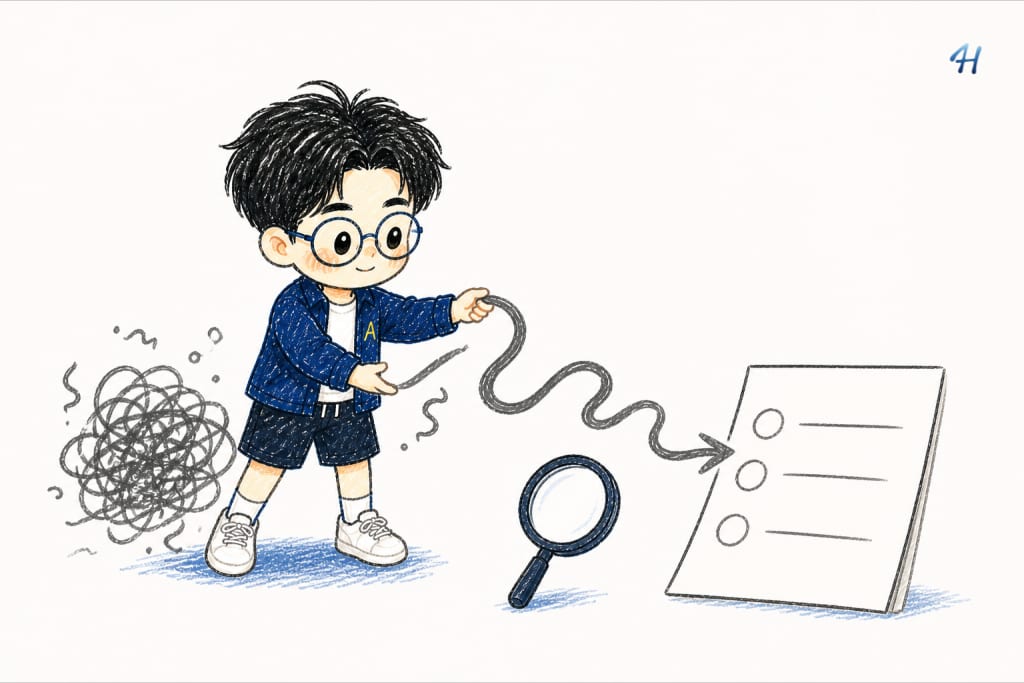
I would not treat an AI-generated table as meeting minutes the moment it appears. Start with one smaller job: take written notes or a transcript you are authorized to use, and create a draft that makes human review faster. Recording tools, transcription services, and automatic task routing are separate decisions.
A meeting summary can sound right while changing what was agreed
Use this synthetic meeting note for practice:
Project check-in — practice material

Mina: The new event-page copy will have a first draft today. Marketing will review it on Wednesday morning.
Ray: The layout is waiting for final brand-color approval. Do not move into engineering until that is confirmed.
Mina: Put brand-color approval on tomorrow's list. Who will confirm it?
Ray: I will ask the design lead, but she is travelling and may not reply tomorrow.
Ken: Tracking fields are not set. I will prepare two options for the next meeting.
Mina: We aim to launch the event page next week, but that is a target, not a confirmed date.
The risky errors are quiet ones: turning “may not reply tomorrow” into a due date, turning a launch target into a decision, or assigning brand-color approval to Ray when he only agreed to ask someone.
Ask for a source-backed draft, not a generic summary
Based only on the meeting record below, create a Markdown table with these columns: confirmed decisions, action items, owner, deadline or time reference, and open questions.

Rules:
- Do not add information that is absent from the source.
- If an owner or deadline is not explicit, write “not specified.”
- Keep targets, guesses, and unconfirmed dates visibly uncertain.
- End with items that need human confirmation.

Meeting record: [paste authorized source text]
This does not make the model trustworthy by itself. It makes the places where it has crossed the source easier to spot.
Review the claims that affect responsibility
Go back to the text and check each row that changes what someone is expected to do:
1. Is “launch next week” a confirmed date or only a target? 2. Is Ray responsible for approving the color, or for asking the design lead? 3. Is Ken deciding the tracking fields, or preparing options?
When the answer is not in the source, the responsible output is “not specified” or “needs confirmation.” Do not make the record look more complete by filling the gap.
Correct one gap instead of starting over
Suppose the first table combines owners and dates in the same column. You can revise the exact failure:
Keep the source and all prior rules. Split owner and deadline into separate columns. Mark any target, guess, or unconfirmed time reference as “unconfirmed” and retain the source wording that supports it.The point of this pass is not a prettier table. It is knowing what you changed and why.
Keep a small review record with the draft
Source text:
Am I authorized to use it here? yes / no / uncertain
Fields to extract:
What the AI must not infer:
Source wording for each row:
Gap found in the first draft:
Who must confirm the final record:
That record does not turn an AI draft into formal meeting minutes. Decisions, ownership, and distribution still belong to the people authorized to confirm them.
The next check depends on what is unclear
If the first output misses the task, go back to the four-field task card. If it looks complete, verify the facts, dates, quotations, judgments, and recommendations it contains. Before using any real notes, also decide whether the material is allowed to enter the account and service you are using.
Related official documentation
This method is not a guide to any meeting-recording product. The following official sources explain prompting principles that can help with clear instructions and output constraints; they do not verify a meeting decision or authorize the use of a transcript.
- OpenAI: Prompt engineering
- Anthropic / Claude: Prompting best practices
- Google / Gemini: Prompt design strategies
Related reading: Define the work before tuning the prompt, verify AI answers and data and authority checks.