This analysis organizes three Pricing Models for Sustainable Game Revenue into a practical comparison of evidence, decisions and current limits.
Read the evidence below as a decision trail: what changed, why it matters, which trade-offs shaped the result, and where the conclusion still depends on context.
Table of contents for this article:
- First, understand what price discrimination is
- The three conditions that price discrimination exists—what about mobile games?
- Next, how can you maximize your income from price discrimination?
- Level 1 pricing strategy(The application of completely differential pricing in mobile games)
- Level 2 pricing strategy(The difficulty with range pricing is... )
- The third level is pricing strategy(Application of Market Segmentation)
- Conclusion(After reading this article, how can you view your profit portfolio?)
Games can't recover costs – what is price discrimination?
This means the official product and virtual item of the same costDepending on the person, time, and reason, sell a product at different prices to different players
During Alibaba's Tmall 2020 Double 11, the real-time product transaction volume exceeded 372.3 billion RMB (about NT$1.6009 trillion) within 10 days. This year, Tmall Double 11 orders reached a peak of 583,000 orders per second, setting a new record, using the principle of price discrimination to achieve excess profits!
This sounds a bit unbelievable, but how could smart people like you not realize that you bought more expensive or cheaper?
So let's take a look at the conditions that make price discrimination valid!
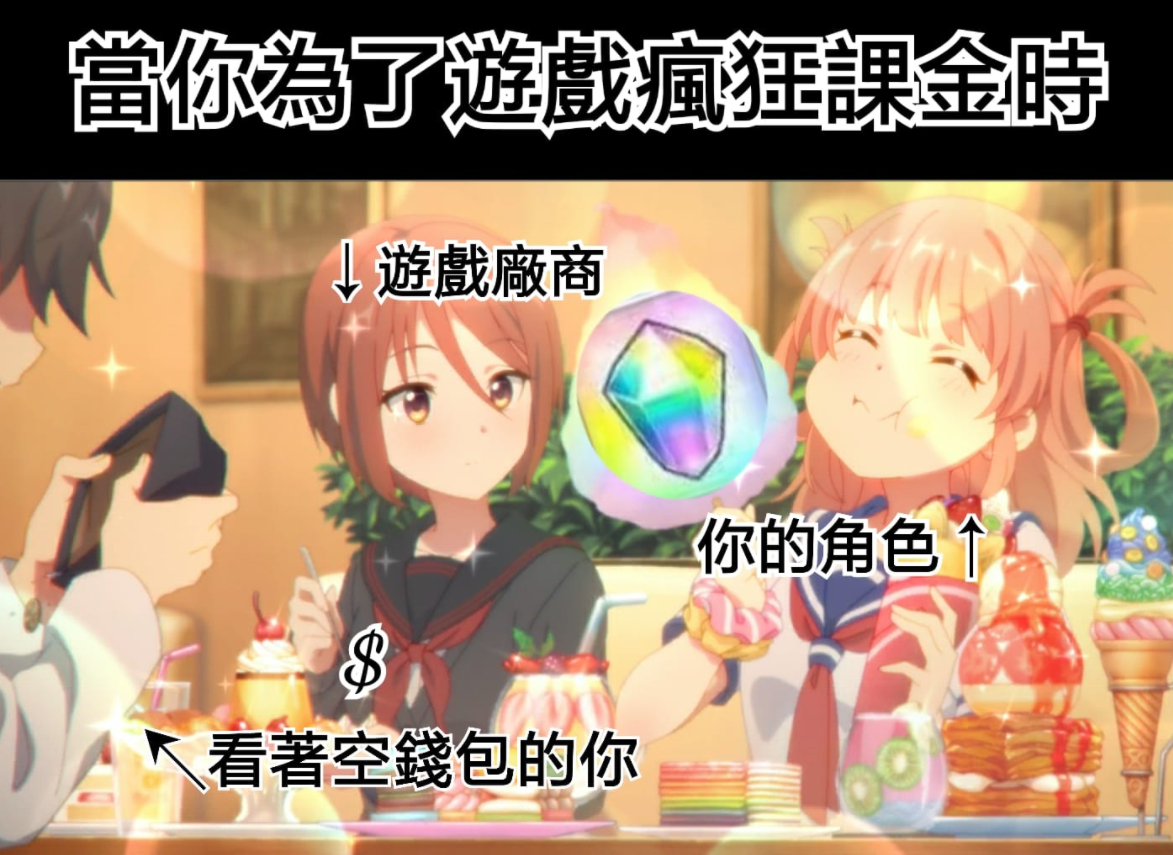
The three conditions that price discrimination exists—what about mobile games?
The core of price discrimination is:Market segmentation
1. The market must be monopolistic
This means there can only be one manufacturer providing the product, there are no competitors in the market, and all virtual item prices and services in mobile games are set solely by the official team. Therefore, the first condition is met

2. The seller can prevent the buyer from reselling at low prices
In mobile games, the virtual items purchased by players can only be used by that account (i.e., bound), so the conditions are met
However, in computer games, Taiwan has digital trading networks, so part of the profits is divided among third parties. Players spend money to trade on digital networks and are unwilling to buy official products, which undermines the prices set by price discrimination
Third-party transactions are a situation most game companies dislike...

3. Effectively differentiate different markets
In real-world purchasing scenarios, this is the most difficult and requires the most effort, but in the game, it can be perfectly realized by recording player behavior, such as online time, paid purchase level, and so on
In summary, the game environment meets the conditions for price discrimination
If you don't properly exploit price discrimination to create excess profits, wouldn't that be a loss?
Games can't recoup costs – How does price discrimination maximize your income?
Our goals are:Sell to everyone at the highest price each player is willing to pay
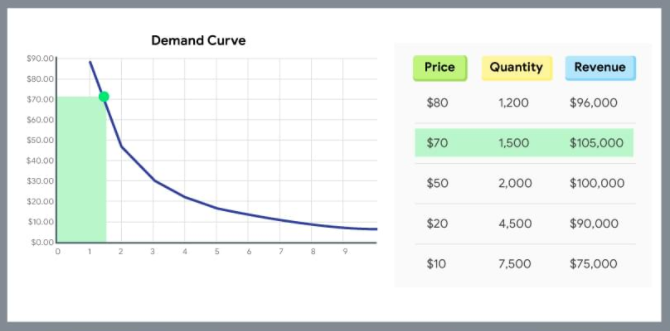
Figure 1: Before price discrimination is used, selling only one product at a single price price, the demand curve shows the best income when the willingness to pay price is 70
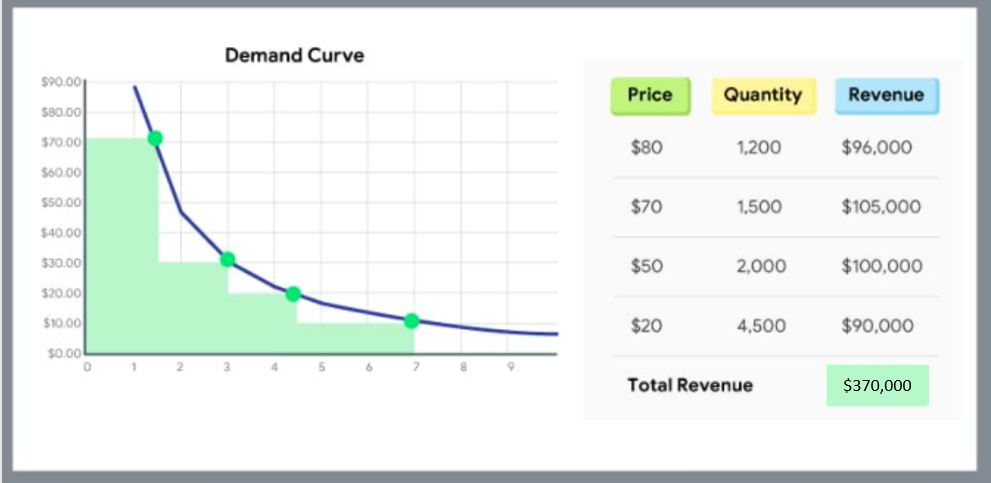
But after using price discrimination in Figure 2, selling the same product to everyone at different prices can expand the income range to different consumer segments,You can see that having multiple price points can bring in more sales and triple your revenue!
Next, I'll show you how to apply price discrimination to mobile game pricing!
First, it's important to know that price discrimination is divided into three levels, each representing a different pricing method
Level 1 pricing strategy (also known as: complete price discrimination)
The first level is the most perfect price discrimination, that isThe market is a state of complete information transparency; sellers know each consumer's willing price and sell products at individual willing pricesBut this rarely happens in reality; there are multiple factors involved
But it does appear very often in mobile games! And you must know that too!
This refers to the game's "various in-game leaderboards, such as combat power, life, costumes, and the single-match or total rankings within competitive games."
All leaderboard positions are determined by the player's willingness to spend as much time and effort as they wish. The more effort they are willing to put in, the better the ranking or competition wins. In the game, you can also purchase paid items to boost the leaderboard, allowing players to earn positions according to their preferred price
Therefore, based on the first-level strategy, setting up leaderboards in the game can effectively stimulate players to generate individual needs

Level 2 pricing strategy (also known as: range pricing)
Set different prices based on the number of purchases by players, offering a range of product combinations so consumers can choose the item that best suits themSecond-level pricing is a more common sales strategy, but if you know the underlying reasons behind it, you'll have more sales ideas
In daily life, it's common to see buying one item for 10 NTD, two for 15 NTD—this illusion that the more you buy, the cheaper it gets
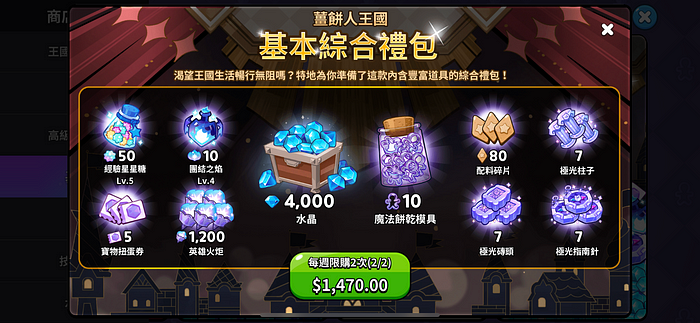
In the game, bundled sales are used, meaning products of the same or different nature are sold together as bundles (for example: quick level-up packs contain experience, enhancement stones, equipment, diamonds, etc., and may also include equipment packs, enhancement packs, etc.)
The purpose is:"Enhancing product value" and "blurring product value,"From the examples above, the truly valuable items might be "diamonds," while other items are things players originally "should have" (PS: You can train experience yourself).
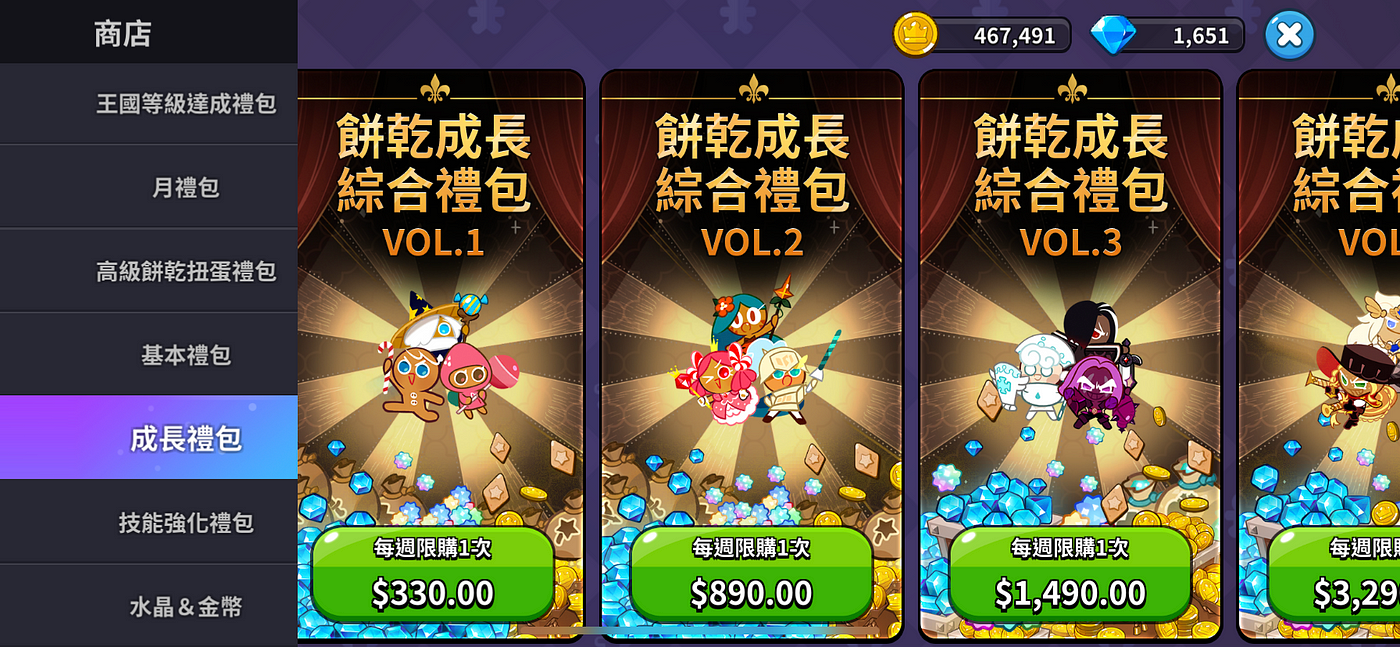
But the hard part isn't putting them together for sale
Instead, they decided how much to sell!
The original author believes that games are just as hard to understand as different players in real life"Willingness to Pay"Therefore, if bundled sales projects perform worse than those without bundled sales, it means there is still room for price optimization, which requires continuous and retesting of all bundled sales to maximize sales profit
Level 3 pricing strategy (also known as: market segmentation)
Here, market segmentation is based on different perspectives based on player behavior, such as online time, spending power, and region
Another common practical application is that movie tickets are divided into student tickets, adult tickets, and senior tickets
In mobile games, developers can easily distinguish different player types by using various settings, andProvides corresponding products and prices for each type of player
Common segmented sales sets in mobile games include:
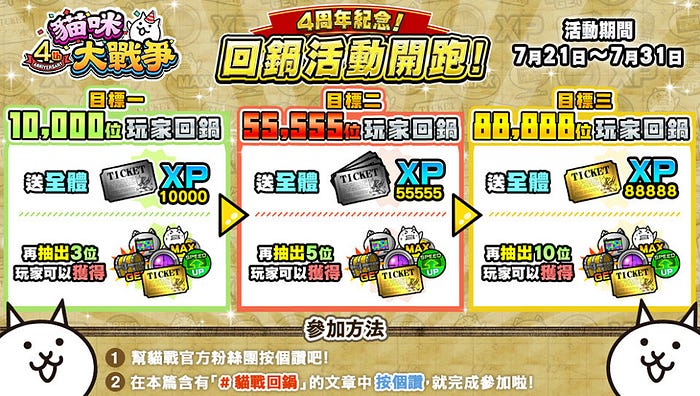
- Veteran players return:Players who log in after setting X days offline will receive special discounts or promotions to improve retention
- Spending Amount (VIP): Players who spend a large amount can receive special discounts that free-to-play players do not have
- Localized pricing: Prices are set based on the player's region, spending power, and other factors. I have a detailed explanation of this in my Instagram post
(Click here to read the article!) )
Additionally, I want to mention something aboutThe beginner gift pack section

If we look at third-level price discrimination, it could be broadly included, but after Water Wolf's commentary, the newbie pack is moved here to explain that the design of the starter pack is a combination decided by the game designer during the game's development
Compared to other event gift pack designs, or local price specialization, which have less connection to "group segmentation," it is more closely related to "game progress."The above is additional content from Senior Water Wolf: If you want to know more about game design, you can check out his column!(Here)

Summary
The above describes the application of price discrimination in mobile games. You might think it's natural while playing, but every design in the store is designed to'Tempt your brain'
After reading this article, you should be thinking:
✔️ Does your game have more sales mixes you just haven't noticed?
✔️ Have they skillfully used ambiguous pricing strategies to sell more "deserved" items for players?
✔️ Was the pricing tested or investigated?
Further reading
- Starting from scratch, I'll guide you through retention rate, the three variables that affect retention, and the five common retention types
- 16 key metrics to maximize retention
- 10 Optimization Goals for Retention from the Gamer's Perspective

What to take away
The article's value is in the evidence and trade-offs behind three Pricing Models for Sustainable Game Revenue, not in treating the conclusion as universal.