This analysis organizes five Game Design Patterns That Keep Players Engaged into a practical comparison of evidence, decisions and current limits.
Read the evidence below as a decision trail: what changed, why it matters, which trade-offs shaped the result, and where the conclusion still depends on context.
Game Design Methodology Game Operations – Goal Breakdown (Key Outcomes)
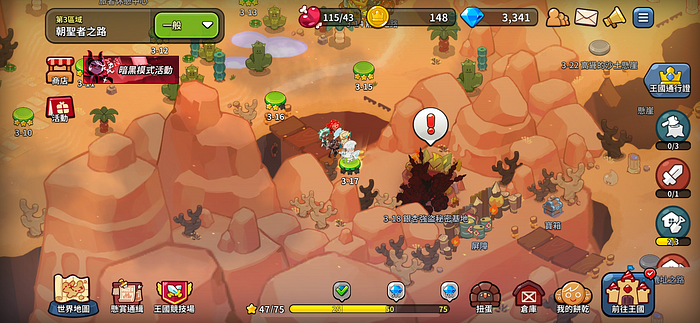
The big goal is to clear all levels on the map, while the small goal is to complete the small quests that appear every stage
This is the main reason I find it addictive: each map has at least 5 small mission stages to clear, keeping players motivated to reach their goals throughout the progress (the objectives are within reach).
Just like OKRs used in project management, breaking down big goals into smaller ones to operate,As a result, you can move step by step toward your goal and stay focused throughoutI have to say, adding timely rewards and periodic storytelling and small items to the push makes the whole process fun
Game Design Method: Stepped Difficulty Design
This is the main source of achievement in PVE, as the game uses a non-linear difficulty design
(Simply put, the difficulty doesn't increase in a straight line,For example: simple - moderate - simple - hard - simple)
If the difficulty of each level is higher than the last, while there is a sense of achievement when you break through, the frustration of failure is more likely. You have to work hard to clear one level after another, which filters out many casual players and goes against the game's target audience
So the game features about one more difficult stage out of every five stages. This design helps players maintain fun and enhances their sense of achievement. After clearing difficult levels, players encounter easier ones, continuously feeling stronger (so satisfying and stinging~ I can't stop).
For detailed stepped difficulty design, you can refer to Shuilang's article:Why exactly are fun games considered "fun"?
Game Design Method: Interwoven Parkour Gameplay
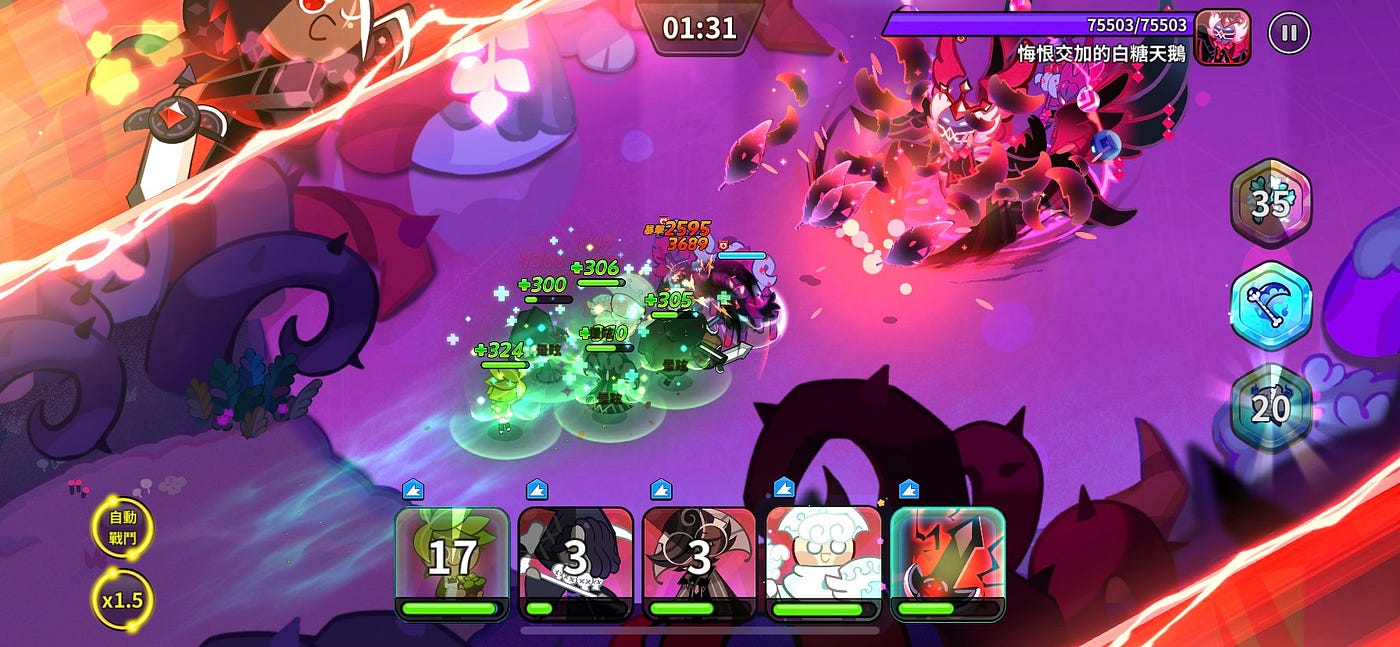
This is also something I think is very important—not because the gameplay is particularly innovative, but because it makes players willing to spend a bit more time watching battles!
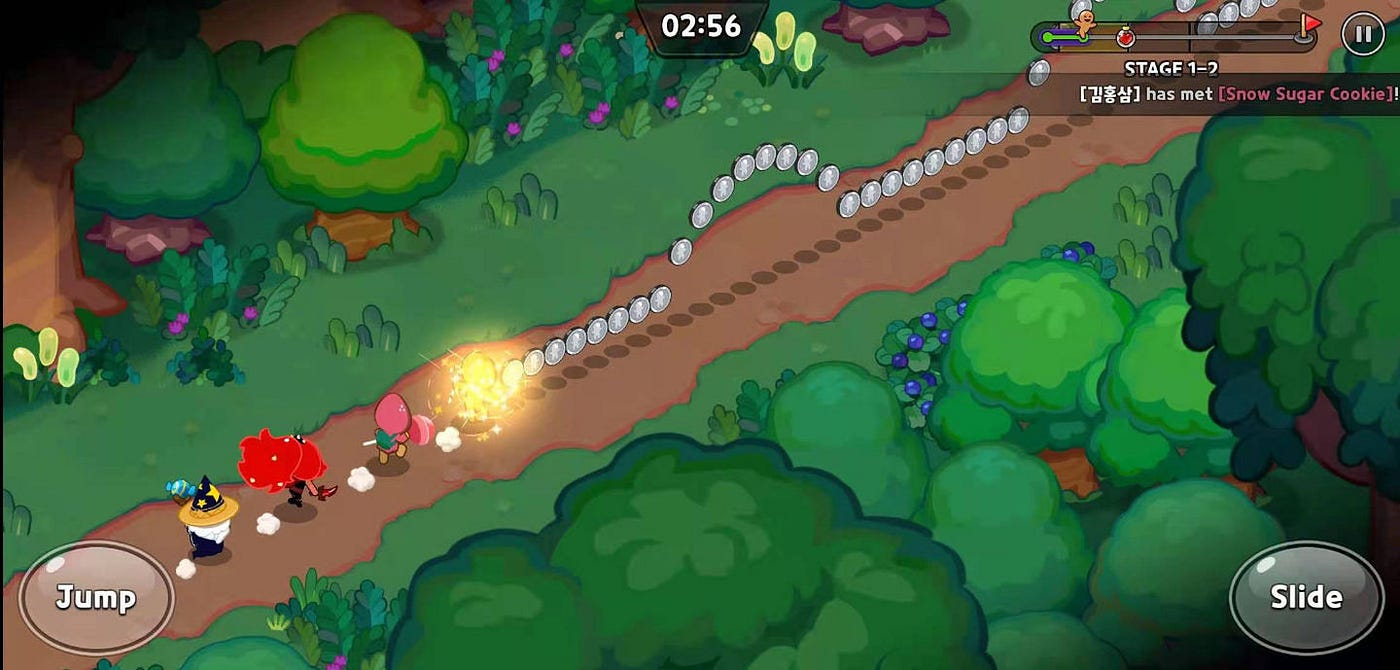
Most mobile games that push through stages are half turn-based, where players speed up and leave the game to play while they do other things. However, the process incorporates parkour gameplay, which not only strengthens IP connections and solidifies the IP's image, but also builds anticipation when players enter the level (I wonder if this level has parkour?). )
As long as players are willing to spend a few extra seconds watching the cookies unleash their skills, they can feel a sense of satisfaction—and that sense of satisfaction is a crucial part of driving the desire to collect!
Game Design Method: The Existence of the Wishing Tree
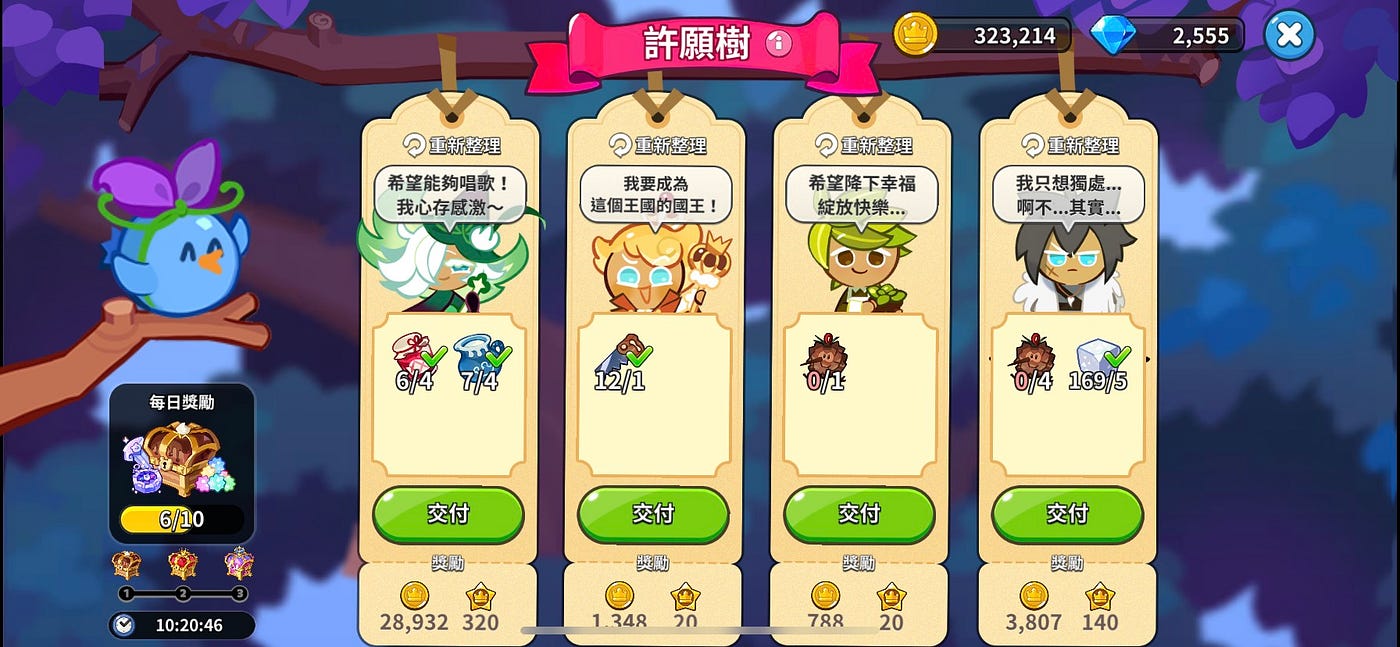
This is the most important part of the game's economic cycle. The fastest and most large way to earn gold in the game is through the Wishing Tree (besides in-game purchases). The Wishing Tree allows surplus items to be recycled.Even when everything is 'done' (exhausting stamina), players still keep producing, unwilling to quit the game
The motivation to continue producing is because of this"Fear and dread"Players fear that the next time you start the game, you won't be able to complete the Wishing Tree quest, so you will only temporarily close the game after ensuring all production proceeds smoothly
The concept of "everything being done" is mentioned in my article discussing retention:
Must-Know Gaming Industry Term - Retenion — 16 Key Metrics for Maximizing Game Retention (Part 2)
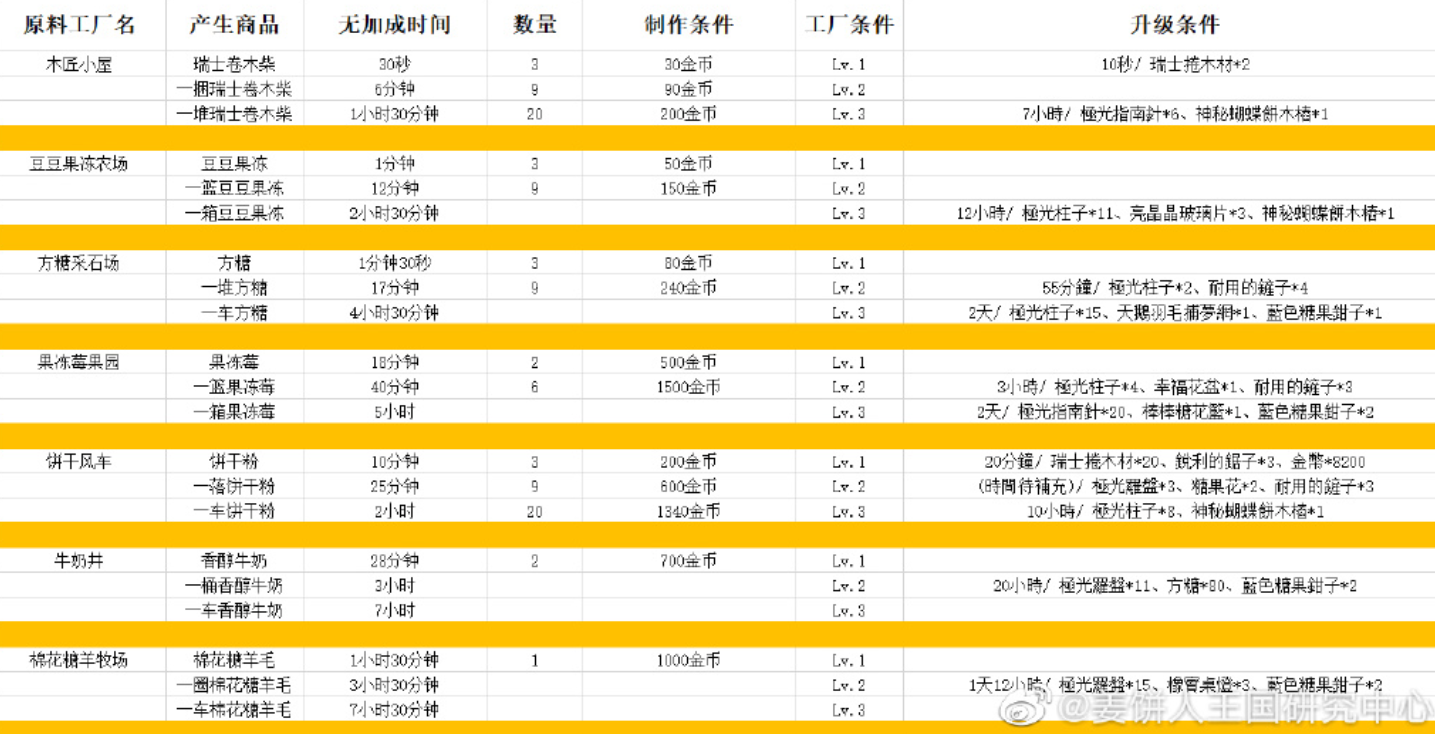
Thoughtful Object Production Time Settings
PS: Maybe this is just a basic numerical design, but from the perspective of player experience and emotion, I still want to mention it
At first, crafting three pieces of wood costs 30 gold and 30 seconds, but crafting nine pieces costs 90 gold and 360 seconds. The gold stats are fine, but the time should have been 90 seconds, but it's increased fourfold!
It takes 15 times longer to make 20 pieces of firewood, and 4 times more to make 9 than 3
Doing so can extend gamers' online time and extend the game's operational lifespan!
Why is that's Actually, it was usedBased on the principle of 'customer demand pricing,' games set different product prices based on player needs and responses(Here, the price refers to the time required to make firewood.) Players who only play for a few hours occasionally will choose the longest time, which is fine
However, for players who play games shortly, when between 30 seconds and 6 minutes, 30 seconds is preferred (Note: in-game construction requires a lot of firewood), because these players have a strong desire for resources (playing continuously for short periods means to "confirm the harvest").
When you select the 30-second firewood, you'll find that it was already produced before you quit the game. If you reproduce it then,Getting stuck in a loop of things never 'finished' continues, which in turn extends the online time

Finally, I want to mention one secret that makes this game so happy!
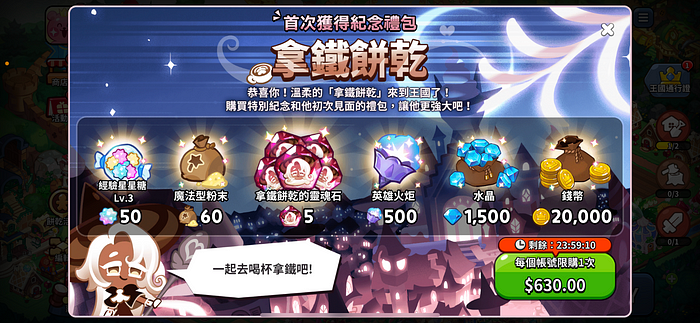
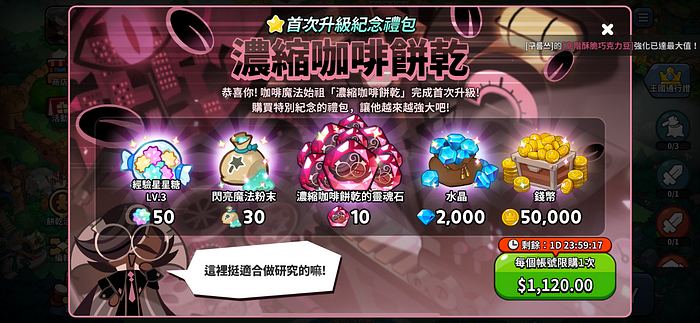
Ubiquitous IAP reminders
The game will pop up when you draw the current character, arena upgrade, etcThe "Limited-Time Paid Gift Pack" means you get an exclusive discount when you get a character you're excited about that period!!
This uses the brain's reward system"Dopamine"—when players get caught up in the cycle of new characters bringing pleasure, they no longer care about the cost-effectiveness of new things appearing in front of them, leading to a shopping addiction, combined with the anxiety created by time pressure, the brain becomes aggressive and stops thinking, leading to buying from them!
Only later did I realize there was no need to buy it at all... Or maybe you don't need to buy so many—people who just got a character will definitely buy a lot XD
Recommended related articles to read
- Starting from scratch, I'll guide you through retention rate, the three variables that affect retention, and the five common retention types
- 16 key metrics to maximize retention
- 10 Optimization Goals for Retention from the Gamer's Perspective

What to take away
The article's value is in the evidence and trade-offs behind five Game Design Patterns That Keep Players Engaged, not in treating the conclusion as universal.