This analysis organizes the evidence behind retention Rate: Three Drivers and Five Core Metrics, then explains the practical implications, trade-offs and current limits.
Read the evidence below as a decision trail: what changed, why it matters, which trade-offs shaped the result, and where the conclusion still depends on context.
Start by understanding the basics to understand what retention rate is. How do you view the relationship with the game and its players? For easier understanding, it will be divided into three parts: upper, middle, and lower
- (Part 1) Starting from scratch, I'll guide you through retention rate, the three variables that affect retention, and the five common retention types
- (Middle) 16 key metrics to maximize retention
- (Part 2) 10 Optimization Goals for Retention from the Gamer's Perspective
- What is retention rate? Let me tell you
- Why is retention rate necessary?
- Affecting retention rates3Variable
- 5Common retention rate data
- How is retention calculated for retention?

what isRetention rate?
What is retention rate? This represents how many players who join on the first day are willing to continue playing on the second day. For example, if 100 new users join on the first day and 50 remain the next day, the retention rate is 50% the next day, and so on
Why is retention rate necessary?
Most importantlyTo estimate the potential of a game,, and during the operation of the game, it is possibleUnderstand the overall level of player experience with the game
Estimating is quite important, especially compared to China todayThe mainstream approach to game production is to first test market response with demo videos featuring different art styles or gameplay, and then decide whether to initiate the projectBut that's not enough—you also need to estimate the game's budget and profits
At this point, by estimating retention and calculating CLTV (User Lifetime Value) mentioned in the previous article, you can roughly estimate the game's profitability
During the operation period,By observing retention rates, you can also identify which part of the game has issuesFor example, suppose an event is launched this weekend but retention drops. First, you know players have a poor reaction to the event, then identify the problem—maybe it's the start of school? Problems with event design?

Three variables that affect retention rates
The retention value varies depending on three variables
1. Game categories
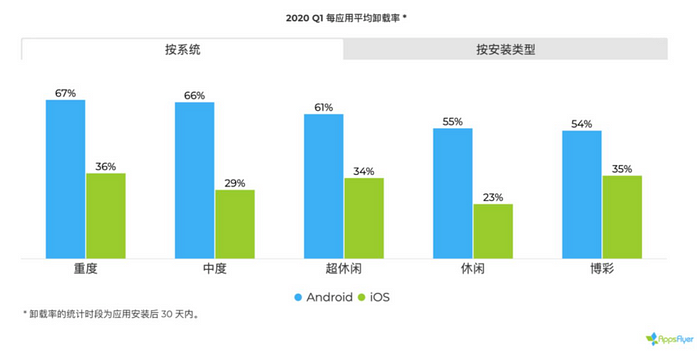
Depending on the game genre, the retention rate values and standards may varyFor example, for hyper-casual games, the metrics to focus on might be secondary or triple retention, but for large MMORPGs, the metrics to focus on are 30 retention, 180 retention, or even longer
2. Channels for user acquisition
User acquisition is divided into organic traffic and inorganic traffic,Organic traffic refers to users who search and download ads themselves through search or after seeing ads; non-organic traffic refers to users who click on ads
There are fundamentally different motivations between the two,Naturally, users have stronger motivation, which also affects their likelihood of staying or paying in the game
3. The added value of the game itself
Here, I mean not only the game itself, but also external communities (fan pages, groups, forums, etc.).The more active the game's peripheral community, the better the game's retention rate
So running a game can't just focus on the game—the community is also very important!

How is retention calculated for retention?

Retention has different algorithms depending on the definition. Here, there are roughly two types, and the two types of retention have clear differences. There are many reasons to explore...
Here, let's get to the bottom of itThe core difference is 'loyalty'Active players, who are more familiar with the game, have higher understanding of the game than newcomers, so they tend to retain players more easily
▫️ New User: Among users added on the start date, there is a login activity on the Xth day after the start date
▫️ Active users: Among users active on the start date, login activity occurs on the Xth day after the start date

The 5 commonly used retention rates
Depending on the game genre mentioned above, the retention needs to be paid special attention to. The most commonly used are the following, each with different goals to focus on
- Secondary retention: retention at the starting point one day after the date(Focus Points: Atmosphere, Selling Points, Impression)
- Three retentions: Starting points are kept three days apart(Focus Points: Integration of feature openness, maintaining selling points, and designing key points)
- Seven Retentions: Starting points with seven days apart(Focus Areas: Content Circulation, Economic System)
- 30 Stay / 180 Stay: And so on(Focus Goals: Strategic depth, social experience)
Due to space limitations, I only mention the definitions here; future articles will explain these 10 goals in more detail
After reading the simple definition of retention, let's continue on
Part Two:Maximizing retention rates16 Key Indicators (Part 2)
Part Three:From the gamer's perspective, it's about retention rates10 Optimization Goals (Part 2)


What to take away
The article's value is in the evidence and trade-offs behind retention Rate: Three Drivers and Five Core Metrics, not in treating the conclusion as universal.