This analysis examines starbucks, Louisa, and 85°C Reveal About Coffee Economics and separates supported implications from claims that still depend on context or further evidence.
Read the evidence below as a decision trail: what changed, why it matters, which trade-offs shaped the result, and where the conclusion still depends on context.
Within the rich aroma of coffee lies a captivating business story. Today, let's explore together how the three major coffee chains—Starbucks, Louisa Coffee, and 85°C—use different business models to reveal the secrets to their success and stand out in a fiercely competitive market.

One of the secrets to success for coffee chains: Starbucksa global direct sales strategy
Stepping into Starbucks, you're not just buying a cup of coffee—you're experiencing a lifestyle. This coffee chain giant, originating in Seattle, USA, has successfully established itself as a global premium coffee brand through its unique direct-operated model. One of Starbucks' secrets to success is strictly controlling the quality of each store through a direct sales model.
Starbucks' choice of the direct-to-store model is no coincidence. This strategy enables companies to ensure that whether you're at Starbucks in New York, Tokyo, or Paris, you can enjoy the same level of products and services. This consistency not only maintains the brand image but also creates Starbucks' unique shopping experience, becoming one of the key factors in its success.
However, Starbucks' approach to business is not unchanging. In certain special markets, such as regions with regulatory restrictions or significant cultural differences, Starbucks also flexibly adopts franchise or licensed operating models. This strategic flexibility is another key to Starbucks' success, enabling it to establish a foothold in over 80 countries worldwide and become a truly multinational brand.
The second secret to the success of coffee chains: LouisaLocalized coffee franchise model
Compared to Starbucks' globalization strategy, Taiwanese local brand Louisa has chosen a completely different path. Founded in 2006, Louisa has established itself in Taiwan's coffee market within just a few years thanks to its unique franchise model. Louisa's secret to success lies in her deep understanding of the local market's franchise strategy.
The key to Louisa's success lies in its low-barrier franchise policy. This not only greatly reduces the company's financial pressure and operational risks, but also attracts a large number of investors aspiring to the coffee business. Franchisees bring not only capital but also deep understanding of the local market, enabling Louisa to quickly adapt to the needs of consumers in different regions, which has become a key to its success.
However, the franchise model also brings challenges, especially in maintaining brand consistency and product quality. To this end, Louisa has established a rigorous training system and quality control mechanism to ensure every franchise store offers products and services that meet brand standards. This strict quality management is also one of the secrets to Louisa's success.

The third secret to success for coffee chains: 85°Cdiversified product strategy
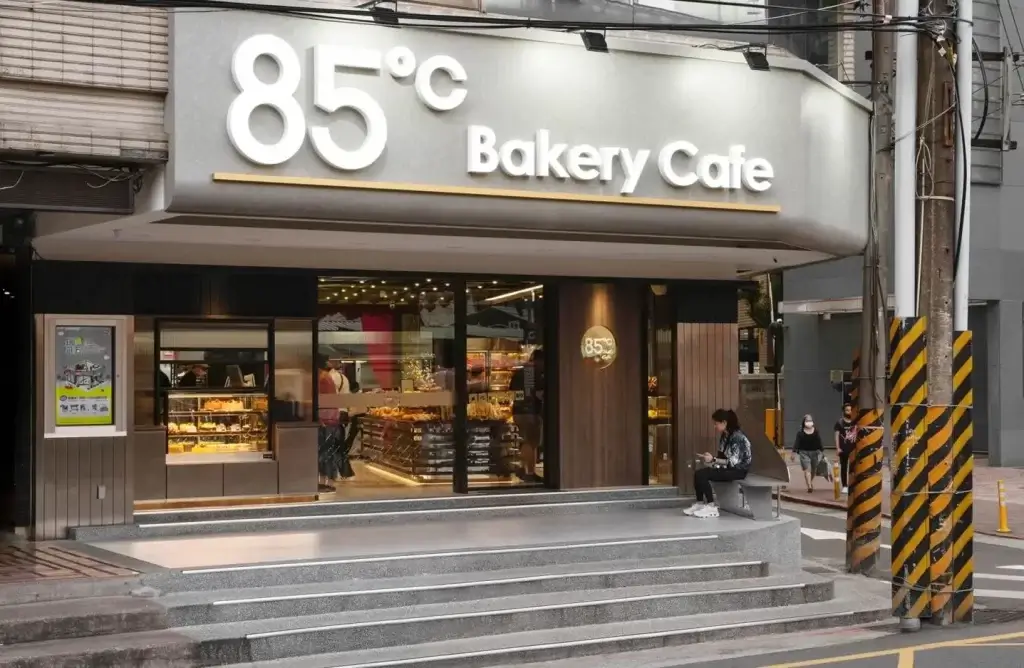
Between Starbucks and Louisa, 85°C has found its own unique position. Founded in 2004, this Taiwanese brand has carved out a niche in a fiercely competitive market with its diversified product lines and flexible business strategies. The secret to 85°C's success lies in its unique "coffee + roasting" business model.
In the Taiwanese domestic market, 85°C mainly adopts a direct sales model, allowing the company to better control product quality and service standards. However, when entering overseas markets, 85°C flexibly adopts franchise and joint venture models, which not only reduces the risks of entering new markets but also allows better utilization of local partners' resources and experience. This flexible business strategy is a key secret to 85°C's success.
Another secret to 85°C's success is its diversified product line. In addition to coffee, 85°C also offers a variety of baked goods and cakes, which allows it to meet a broader range of consumer needs and brings more sources of revenue to the brand. This diversified strategy not only increases customer choices but also improves store efficiency, becoming a key factor for 85°C to stand out in the competition.
Revealing the secret to success for coffee chains: There is no one-size-fits-all answer
By analyzing these three coffee chain brands, we can see that there is no one-size-fits-all answer behind the success of coffee chains. Every company needs to make choices based on its own resource resources, brand positioning, target market, and long-term development strategy.
The direct sales model allows for better control over brand image and product quality, but it also requires more capital investment and management costs. The franchise model enables rapid expansion but faces challenges in maintaining brand consistency. Hybrid models like 85°C require greater management wisdom to balance the needs of different markets.
Regardless of which model is chosen, the key to success for coffee chains lies in achieving sustained growth while ensuring quality. This requires companies to continuously innovate, flexibly respond to market changes, and adhere to their brand philosophy.
In this rapidly changing market, only brands that find the right path and continuously adjust and optimize can remain undefeated in fierce competition. Just as a good cup of coffee requires careful roasting and brewing, a successful coffee chain also needs time, passion, and wisdom to settle. This may be the most important secret to the success of coffee chains.
Articles you may be interested in
Clear and Accessible: How AI Semiconductor Technology Drives AI Training
Revolutionary breakthrough: Roblox AI makes 3D scene generation simple
What to take away
The article's value is in the evidence and trade-offs behind what Starbucks, Louisa, and 85°C Reveal About Coffee Economics, not in treating the conclusion as universal.